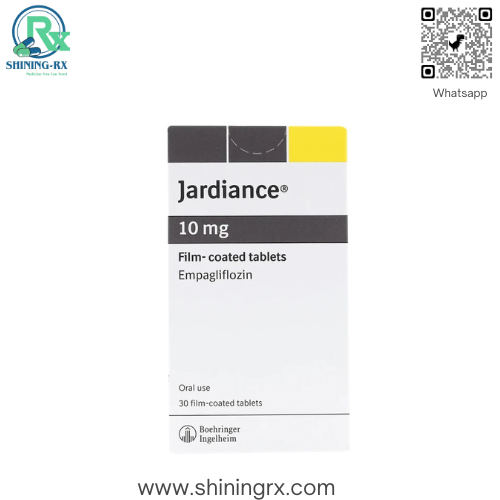
Empagliflozin is supplied in 10 mg, 25 mg. The standard approach is 10 mg once daily in the morning, increased to 25 mg
Strength and use
| Strength | Typical role |
|---|---|
| 10 mg | Starting or low-dose maintenance |
| 25 mg | Standard maintenance dose |
Titration path
- 1
Step 1: initiate
Begin at the lowest useful strength of 10 mg.
- 2
Step 2: assess
Review after the onset window of glucosuria within 24 hours, HbA1c effect over 12 weeks.
- 3
Step 3: escalate
Move up one strength only if the response is partial and tolerance is good.
- 4
Step 4: maintain
Hold at the lowest effective dose for type 2 diabetes, heart failure and CKD and review periodically.
Key takeaways
- Standard dosing: 10 mg once daily in the morning, increased to 25 mg
- Dosing interval: 24-hour dosing.
- Never double up after a missed dose: resume the normal schedule.
- Store below 30 °C to protect potency across the shelf life.
Missed doses and adherence
If a dose is missed and the next one is close, skip it. Doubling increases the risk of genital mycotic infection without improving outcomes. Blister packaging and clear dispensing labels measurably improve adherence on film-coated tablet lines.
Empagliflozin at a glance
| Attribute | Detail |
|---|---|
| Drug class | SGLT2 inhibitor |
| Common brand | Jardiance |
| Licensed use | type 2 diabetes, heart failure and CKD |
| Available strengths | 10 mg, 25 mg |
| Dosage form | film-coated tablet |
| Typical onset | glucosuria within 24 hours, HbA1c effect over 12 weeks |
| Duration / dosing interval | 24-hour dosing |
| Storage | below 30 °C |