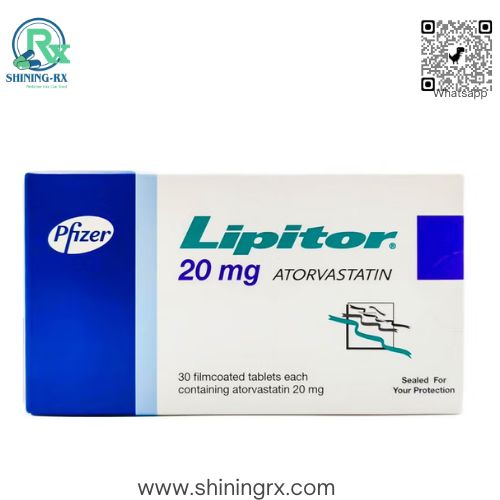
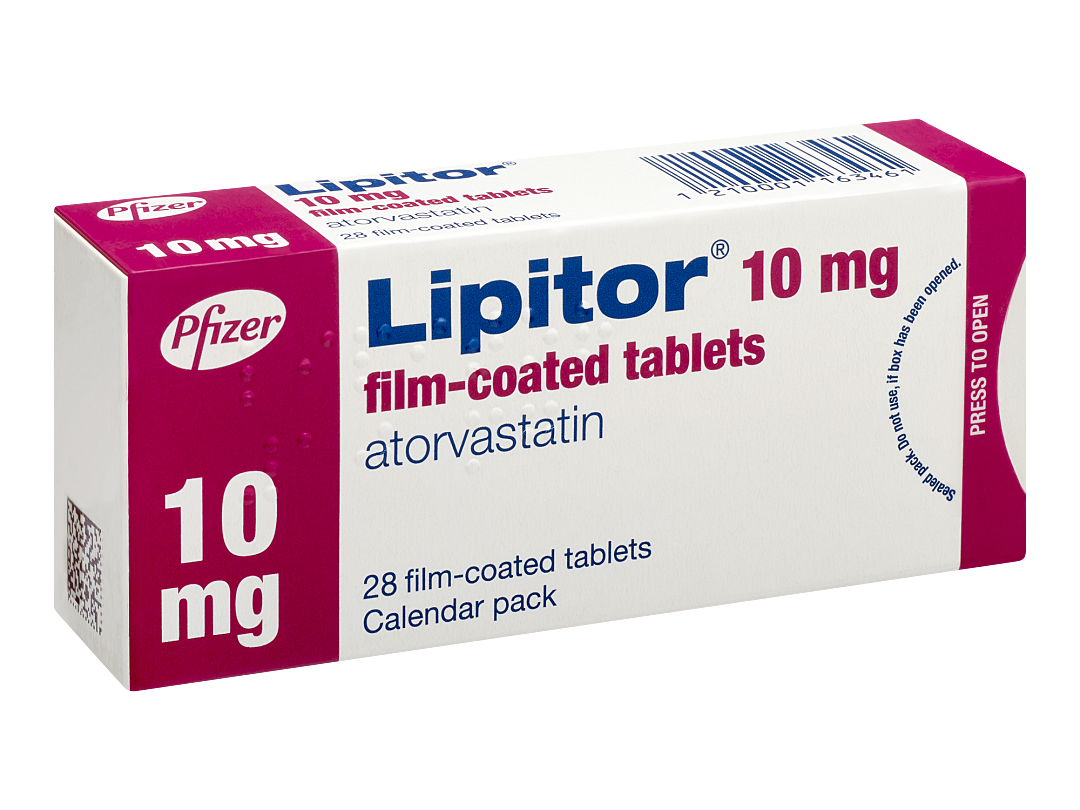
Atorvastatin, sold most widely as Lipitor, is a HMG-CoA reductase inhibitor used for hyperlipidaemia and cardiovascular risk reduction. This guide covers how it works, what a standard course looks like, and how ShiningRX supplies it to trade buyers and consumers in the USA, UK and Australia.
Key takeaways
- Atorvastatin is a HMG-CoA reductase inhibitor indicated for hyperlipidaemia and cardiovascular risk reduction.
- Typical dosing: 10–20 mg nightly, titrated to LDL target.
- Onset is LDL response measurable at 4 weeks; effect lasts 24-hour dosing.
- Most reported side effects are myalgia and other mild, self-limiting reactions.
- Store below 30 °C.
Atorvastatin at a glance
| Attribute | Detail |
|---|---|
| Drug class | HMG-CoA reductase inhibitor |
| Common brand | Lipitor |
| Licensed use | hyperlipidaemia and cardiovascular risk reduction |
| Available strengths | 10, 20, 40, 80 mg |
| Dosage form | film-coated tablet |
| Typical onset | LDL response measurable at 4 weeks |
| Duration / dosing interval | 24-hour dosing |
| Storage | below 30 °C |
How Atorvastatin works
As a HMG-CoA reductase inhibitor, Atorvastatin acts on the pathway that drives hyperlipidaemia and cardiovascular risk reduction. The pharmacological effect is dose-related, which is why prescribers begin at the lowest useful strength and adjust on response rather than starting at the maximum. In practice that means 10–20 mg nightly, titrated to LDL target
Starting a Atorvastatin course
- 1
Clinical assessment
Confirm the indication for hyperlipidaemia and cardiovascular risk reduction, review comorbidities and check the contraindication list before the first dose.
- 2
Initiate at the standard dose
10–20 mg nightly, titrated to LDL target
- 3
Review at the first checkpoint
Reassess once the expected onset window of LDL response measurable at 4 weeks has passed and document tolerability.
- 4
Titrate or switch
If response is partial and tolerance is good, step up within the licensed range; if tolerance is poor, consider Rosuvastatin.
Safety profile in brief
Commonly reported effects include myalgia, raised transaminases, GI upset. Atorvastatin should be avoided in active liver disease and pregnancy. Any severe, persistent or unexpected reaction warrants stopping the medicine and seeking clinical review.