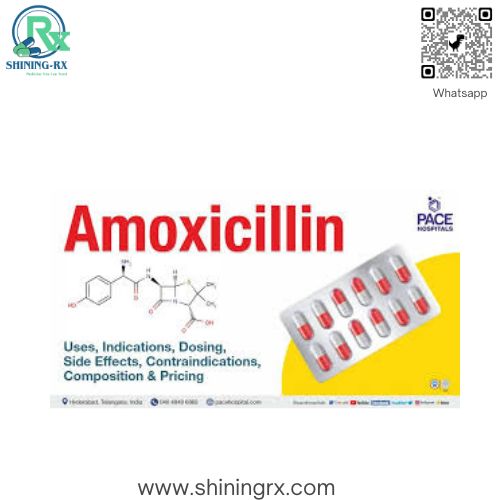
Most Amoxicillin side effects are mild, dose-related and settle as treatment continues. The reactions that matter clinically are rare but need to be recognised quickly.
Key takeaways
- Common effects: diarrhoea, rash, candidiasis.
- Avoid Amoxicillin in penicillin allergy and infectious mononucleosis.
- Dose-related effects often resolve by stepping back one strength.
- Severe or persistent reactions warrant stopping and seeking review.
Frequency bands
| Frequency | Reactions | Action |
|---|---|---|
| Very common (>10%) | diarrhoea, rash | Usually self-limiting; supportive measures and reassurance. |
| Common (1–10%) | candidiasis | Review dose and timing; consider dose reduction. |
| Uncommon (<1%) | hypersensitivity, marked laboratory changes | Stop and arrange clinical assessment. |
| Rare | serious organ-specific reactions | Stop immediately; urgent medical attention. |
Reducing the burden
Take Amoxicillin exactly as directed: 500 mg three times daily or 875 mg twice daily for 5–7 days. Splitting titration into smaller steps, dosing with food where the label allows, and hydrating well cover most tolerability problems seen in practice.
Amoxicillin at a glance
| Attribute | Detail |
|---|---|
| Drug class | aminopenicillin antibiotic |
| Common brand | Amoxil |
| Licensed use | respiratory, ENT, dental and urinary infections |
| Available strengths | 250 mg, 500 mg, 875 mg, suspensions |
| Dosage form | capsule / tablet / suspension |
| Typical onset | symptom improvement in 48–72 hours |
| Duration / dosing interval | 8–12 hour dosing interval |
| Storage | below 25 °C; reconstituted suspension refrigerated |